I heard those words a few weeks ago, from Kimberly (my high school BFF), and the lightbulb went from darkness to 150 watts instantly. While that was happening, a hand reached out and smacked me on the head, while another hand pushed my lips into a “wow” like kind of expression and a loud whisper of the word “DOH” was muttered.
We were talking about her Parkinson’s disease, how it is already making changes physically and those physical changes make changes to her emotionally. I had mentioned that I have a collection of ‘disorders’ of what are not rare or life-altering. I mentioned that, whenever I want to give in to a pity party for one, I just remember about other people I know who have far more serious medical issues and that often helps to turn off the self-pity. It was then when Kimberly uttered the words, “It isn’t a competition”.
Like I said, “Pow! Boom! Bam!” That engrained since childhood belief that what I am, who I am, how I feel is never as important – if it’s even validated – and I should spend time dwelling on it because it’s been validated – because there are so many others facing far more complex and serious challenges. And then there are those who want to strongly remind me of how grateful I should be because I do, indeed, have many less challenges in life than others have. Somehow, while I don’t remember how those messages were delivered, they came to be known in perception that self-care needs are driven by self-pity. And self-pity is a sin of sorts.
I remember my mom once saying on a morning when she was feeling ill, that she would be going to work anyhow, with a phrase I’ve never forgotten. She said, “Why stay home and feel bad when I can go to work and make everyone miserable?” That statement now reeks of sarcasm, but I never knew my mother to be sarcastic and so I interpreted it as martyrdom. Oh, everything my mother did had some sense of martyrdom attached to it. And yet, there were times I also remember her being very self-indulgent; and only now recognize that the self-indulgence was her way of ‘paying herself’ for her martyrdom.
But it isn’t a competition in life about who has it the worst, despite the fact that my brain has been wired to look for people who have it worse than I do so I can accept that I don’t have it so bad. Yes, it can come across as gratitude, but not in the kind way it should do so.
I have several medical issues I deal with, mostly, as my brother Mark once said, “better living through chemistry”. I wouldn’t be surprised that the majority of people who read this post are in that same boat, and not all of them have to do with how we age. I don’t begrudge anyone else feeling frustrated and self-pitying at times for what they have to deal with to try to bring the best quality to their lives as they can. But I feel guilt for allowing myself to feel that way.
It isn’t a competition. We may share some of the same issues, but we all have different ways that each issue affects us. I’m allowed to be frustrated that some medications that work for 99% of the people taking them leave me hanging in the odd 1% for whom they don’t work as planned.
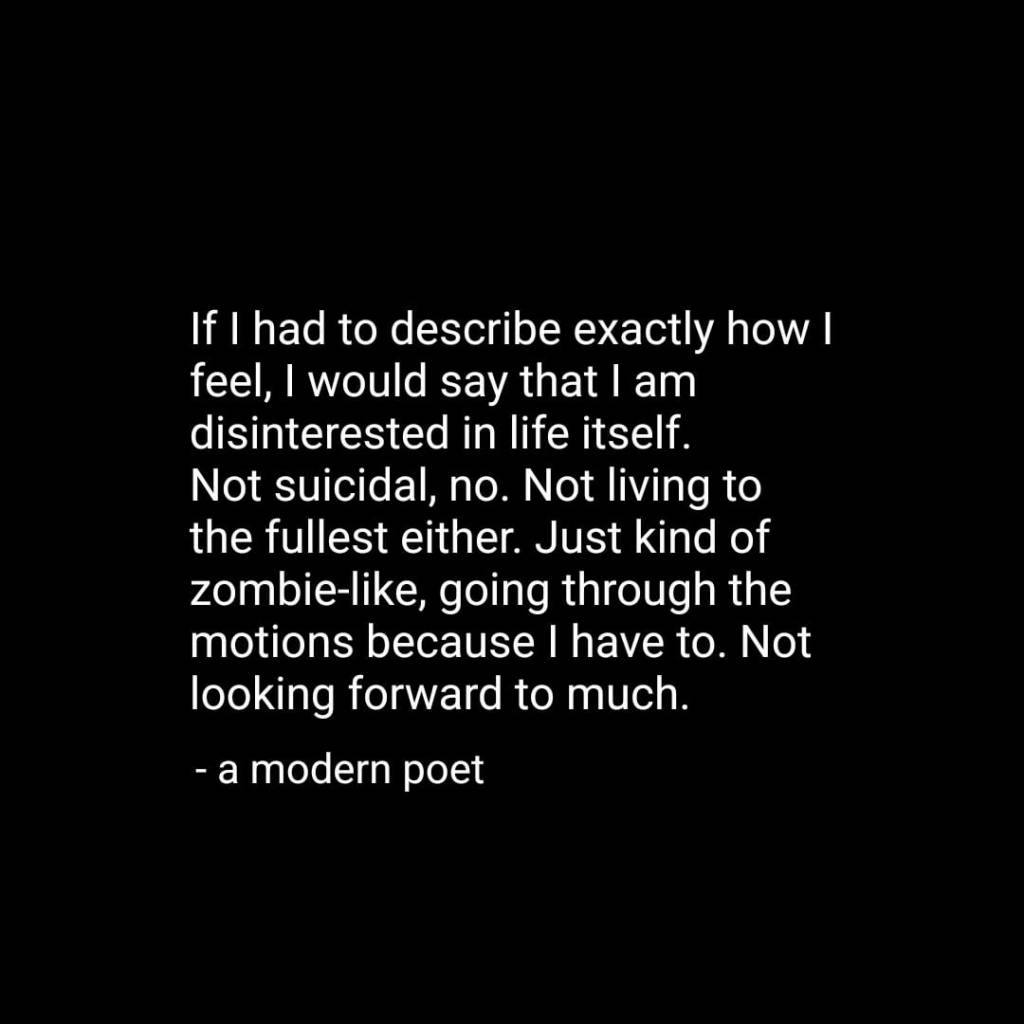
I reported to my doctor in September that I was already experiencing the melancholy of S.A.D. (Seasonal Affective Disorder), which normally hits me about the 2nd to 3rd week of October. I had lack of motivation, complete lack of energy, nothing I felt good about making it from one day to the next. The energy lack exists without the depression, but not caring to take care of hygiene needs as should be shows the level of aptitude in the depression. I’m not suicidal – – and I feel like I need to say that often because there are people who associate someone with depression as suicidal. Honestly, I have no desire to kill myself, but there are moments when I realize I would be perfectly okay with it if I went to sleep and didn’t wake up again. Anyhow, my doctor weaned me off the anti-depressant I’d been on for about 3 years and started me on a brand new one. It’s called Vraylar, and the maker fortunately has a patient assistance program which is providing me the drug at no cost, because my co-pay would have been $472 a month. Yes, a month!
I’ve only just recently been speaking up about the fact that I suffer from depression. I’m not ashamed of having the diagnosis, but there again, stating that I suffer sounds to me like I’m complaining… and so many people out there have it so much worse than me. That’s why I’ve kept silent or only mentioned depression in the vaguest of ways. But it feels good to put it out to the universe that I am considered to have a depressive disorder, and I deal with it functionally, often times without people even knowing!
So, whatever you are dealing with in your life – in any regard – it’s okay to own it. Owning the issues you are facing does not detract from or compete with issues that any other person is dealing with. Some may be similar, many are completely different. You’re going to handle them in your own way, just as we all are going to do the same. And although I’ve built this post up around medical issues and specifically, depression, it’s true along any path we are journeying. It might be medical, but it could be financial, familial, relationship issues and everything else. We aren’t competing to get through life!
(P.S. I can’t believe how different I feel at the end of writing this! This release of competition frees me to just love myself with whatever I am dealing with without measuring myself to other people. Kimberly, I can’t wait for the next thing I’m going to learn from you!)
DISCLOSURE: This post will discuss depression both at a factual level and at a personal level. If this kind of content is in any way upsetting to you to read, please close the post without continuing to read.
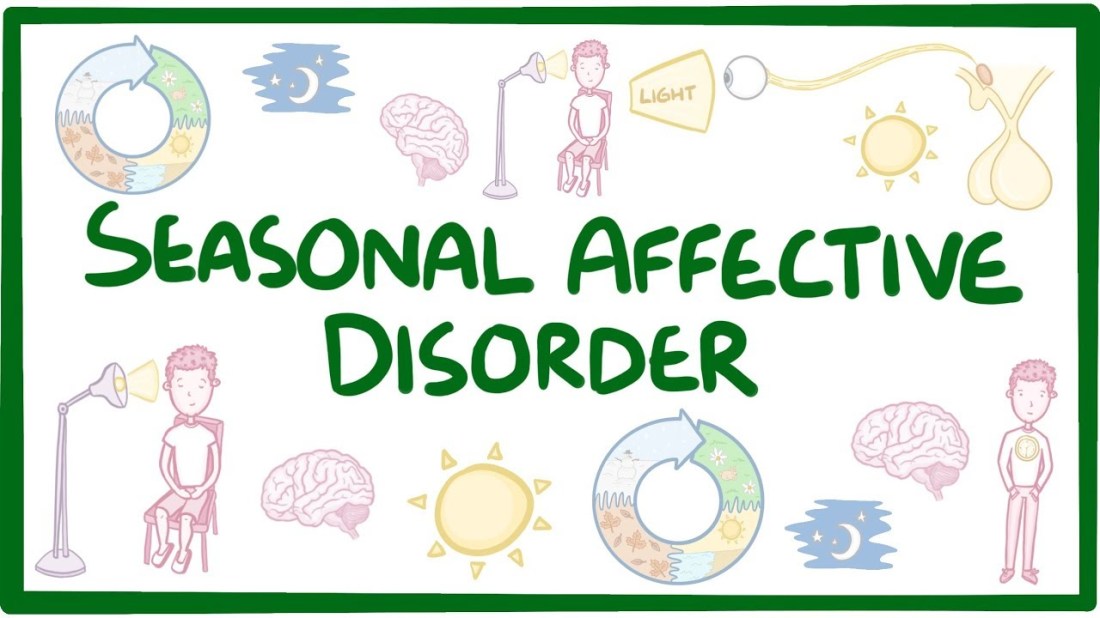
I’m not certain that anyone who has lived or lives with depression is all that excited that depression gets its own awareness month. I suppose that November is the logical month, since this is the time of year when S.A.D. (Seasonal Affective Disorder) occurs for some people. S.A.D. is psychologically labeled as a form of depression. Its onset is thought to be because less daylight may trigger a chemical change in the brain leading to symptoms of depression.
S.A.D. became an actual diagnosis in 1984. However, although at the time it was not named nor recognized, I first experienced the symptoms of it in fall of 1975. I wasn’t ever naturally perky, vivacious and outgoing, so I only knew that I tended to feel noticeably melancholy, and I adjusted to the feeling so that it became ‘normal’. While I did feel more “down” than usual, it wasn’t a big deal because I didn’t live my life as “up”. It was only when the feeling started occurring annually, usually sometime between the last week of September and the first week of October, that I recognized the pattern.
I wasn’t officially diagnosed as suffering through S.A.D. until I was in my early 50s, when I ended up with a doctor who listened to me mention the annual onset of melancholy as I had told every new doctor who had previously undertaken my care. When Jenn listened, heard me and nodded in understanding, labeling what I went through with a name and assuring me that many people suffer in the same way, I was finally able to understand it and begin to accept it. I learned to bundle up and get outside on sunny days from September through February, raise my face up directly at the sun, close my eyes and just be for a few moments. Now, every year, I recognize the melancholy at its onset, and know that it’s temporary and it’s not a bad reflection on me. And people don’t notice the mood I’m in because I’ve perfected wearing the mask of happy, perky, etc. in public, a mask I needed to form and wear in order to survive 20+ years on the front line in the hotel industry.
I’ve had a few times in my life where I was very depressed, but those were always times when there was a BIG change in my life that impacted me enough to struggle with whether I wanted to keep going. My friend Melissa, who also suffers with clinical depression (100% chemical imbalance in her brain), once said, “I don’t want to kill myself. I just don’t want to go on living this way anymore.”
Exactly! I have no desire to commit suicide, and to be honest, here is probably the biggest reason: There was a man in the church my family moved to after we were all adults. It was a larger church than the small one I grew up in (where everybody knew everybody else’s business). I was living about 35 minutes from “home”, but I tried to join my mother at least once a month for a church service. At the very first service, I noticed a man wearing a blue mask and I asked my mom why with curiosity. The answer was nothing I would have expected. This man wore this mask whenever he was around people, because he had terrible scars on his lower face and mouth area. And those scars came from the fact that he attempted to swallow a gun but didn’t succeed. Think about that again – a man put a gun into his mouth with the intention of committing suicide, pulled the trigger, and somehow the bullet went down in aim far enough to slip between two vertebrae in his neck. His face and mouth were so disfigured because he hadn’t pushed the gun very far into his mouth and the recoil caused the injuries.
Yes, that’s a horrible story to know, but what I came away with from it is that suicide can fail. Truly, I realized that if I were to attempt – and fail – it would be the ultimate way in which I could disappoint my parents, and I knew the guilt of that would eat me alive. So, I have made a pledge that I will not commit suicide and have even said to my PCP, “I won’t commit suicide, because with my luck, I’d fail.”
In 2017, I suffered what would be diagnosed as a major depressive episode. (Again, I’ve never been a perky extrovert, but I never thought of myself as depressed, either!). It was the end of January when I actually could feel that I was depressed – not suicidal – but really doing nothing more than barely existing. Personal hygiene became something I cared nothing about. I didn’t read, didn’t watch TV, ate sporadically and mostly just sat. Melissa’s words came back to me – “I just don’t to go on living this way.” And yes, there was a small difficult emotion playing into that time – an action by someone that intellectually made sense, but emotionally made me feel completely forgotten and uncared for.
As a result of that episode, I now take an antidepressant in addition to the one I take for S.A.D. And I still have issues with motivation at times, but I recognize now that the lack of being motivated for physical activity is 90% because of my health, and not my mental state. I can lay awake while I wait for Mr. Sandman and actually see myself doing a whole bunch of things when I get up the next day. Well, you probably have heard the saying that “the path to hell is paved with good intentions…”
That’s the Readers Digest Condensed Version of my personal experience with depression. Now on to some facts I’d like to share:
Depression is considered a high-functioning mental illness. High-functioning mental illness is a term used to describe those living with a mental illness that most people don’t detect.
Approximately 3.8% of the population experience depression, including 5% of adults (4% among men and 6% among women), and 5.7% of adults older than 60 years. That means that approximately 280 million people in the world suffer from depression. It’s interesting to note, however, that only 7 million of that population have been officially diagnosed and are, or have, received treatment for that diagnosis.
When I was growing up, there was a stigma associated with needing help with the feeling of depression, whether through therapy, medication or both. People who couldn’t seem to deal with things that life threw at them without needing help were thought to be weak. And at a time in society where outward impressions were a big priority, people didn’t seek help because they didn’t want to risk having someone(s) in their peer group finding out and thus being labeled as weak.
There are two basic types of depression. Depression that stems from a traumatic event or events can be helped by spending time with a qualified therapist who can help work through the many and varied emotions around a specific event(s). Some may only need short-term therapy sessions to understand the emotions behind the depression and learn to accept and manage those emotions. For some, that therapy opens up a can of hidden emotions from other events or situations, and the therapeutic sessions may run for a longer time. Others may suffer with a chemical imbalance within the brain often brought on with a change in hormonal balance within the body or faulty mood regulation within the brain. Spending time with a qualified therapist can help determine if the depression is emotionally based or chemically based. If chemically based, you will be referred to a psychiatrist who will be able to work with you to find medications that can help balance the brain’s chemical measurements and bring relief.
These are facts that many people have heard or heard enough about to recognize depression as an illness. But it seems that their recognition is as far as their grasp goes. Depression can be well-hidden from those around us. Those of us who are diagnosed but still able to function in daily life, do tend to keep the diagnosis well-hidden, because the diagnosis itself makes us feel vulnerable.
I am clinically diagnosed with depression, and only because I annually experience S.A.D. to some degree and have had an episode of major depression (documented by my request in my medical chart), am I willing to accept (more or less) the diagnosis. But I don’t feel depressed. Oh, I may have a moment now and again when something happens that makes me sad, but I don’t carry around depression on my shoulders. When asked by someone why I’m not more social, it’s truthful to say that I am most content when I am by myself. To be around strangers for a specific reason sounds like a waste of time for me, because it doesn’t allow me the opportunity to develop a one-on-one relationship with any of those people around me. Also, despite my own issues (and I have a lifetime subscription to issues), I am comfortable enough with who I am to be comfortable by myself. For example, there is a loved one in my life who constantly needs to have conversation going around him/her, and that conversation is pure surface and trivial matters. When we are in a car, I am quite content to enjoy the silence – both to keep me more focused as a driver as well as to let me enjoy the scenery. But within less than 2 minutes of silence, this person will again speak up and share another unimportant story. It is apparently important that I know that a mutual friend won $50 playing the lottery or bowled a perfect 300 game in the bowling league that person belongs to or caught a 15″ catfish when he went fishing (last week, yesterday, doesn’t matter when). It is that important to this person to have conversation – as equally as important as my desire for silence – and so I listen, albeit not very closely, because I have nothing to add. However, knowing that all relationships require compromise, I say nothing about how much I dislike constant conversation like that because I believe it makes that person feel more comfortable in conversation than I am discomfortable with it.
But again, my appreciation of silence and my contentment of being alone doesn’t mean I’m depressed in some way. That is just how my life is, and I enjoy my life by giving myself those things.
This is getting long, but there are two more points I want to make. The first point is how people react to finding out that a person is experiencing an episode of sadness (not only just depression). When people say, “Let me know if you need anything”, it’s an empty platitude that allows that person to move on and go back to his/her own life without guilt. Even without being a depressive, I have never found it comfortable, much less easy, to reach out for help, and especially when I need it. I can remember incidents where I found it uncomfortable as far back as my teenage years, and I’m pretty sure I’ve gotten even less willing as time goes on. I know this relates back to my childhood, when my parents strongly reinforced the idea of not letting them see you sweat, don’t let them see that you can’t accomplish anything you think that they think you should be able to do. Because of that, I tend not to mutter the words of being called on if needed, and instead tend to show up fairly actively in just checking in once or twice a week. I also include in that checking in the question, “What can I do to help you today, even though you’d rather not admit that someone doing something for you will make you feel ‘weak’?” I might show up every 10 days of so with that person’s favorite donut and a cup of coffee, or with a ready-to-heat up meal I make that I know they enjoy. It’s one thing to offer to make yourself available to reach out if they need something; it’s another thing to do something that you know might be appreciated without waiting to be asked.
And the other point I have to make is, when there is a suicide, the words like, “If only he/she had talked to me” or “I wish he/she would have come and talked to me” make me cringe!
I know the statement above to be true. There are multiple reasons to remain silent about our feelings. I have chosen to speak about these feelings to others from time to time, and while they may listen, they can’t grasp the emotions because they’ve never experienced them (or never equated what they might be feeling as a negative emotion). Have you ever had a “meh” day? “Meh” being described where there was very little energy physically, mentally and/or emotionally that you foresaw in your life for the next 24 hours? If you’ve ever felt like you had a day that meant nothing good was headed your way, nor did you think there was anything bad headed your way either, then you’ve had a “meh” day. And if you can relate to what a “meh” day feels like, just multiply that times infinity, and that’s why depression feels like for me. There are things that make me smile, times where I’m in a moment and having a fabulous time, but most of the time, my days are “meh”.
And please understand this, which is a difficult pill to swallow: Suicide is a choice. (A Ph.D. I worked with said that to me because of a patient who would sometimes call and if that doctor was in session and couldn’t take the call, would make comments about committing suicide if she wasn’t that important to him.) Hell no, it’s not a smart choice, and that choice doesn’t happen overnight. As humans, we can suggest and advice people we care about to make a different choice, but we have no capacity to make that person change his/her choice. “If only” doesn’t erase what happened. Again, to me, that comment feels self-satisfying, a way to stave off any guilt be suggesting that if you had been in the picture, maybe things would have turned out differently. Think about it logically, and committing suicide is done without conversation beforehand and always when the person is alone.
This has gotten way longer than I thought it would be, despite having read the draft multiple times and edited some out each time. This may be boring to read to some or many of you. But…if I’ve given a deeper understanding of depression from my own experiences, or if I’d made you look at yourself or others in your life armed with this knowledge and understanding, then my mission has been accomplished! And, yes, you are getting this blog on the last day of November, but I’ve probably given 10 or more hours in writing and reading and re-reading and editing and re-reading, etc. to it, so it’s taken me a while to get it ready to publish. (If there were 31 days in November, you’d probably still get this on the last day of the month because there are still ways to edit this that I’ve run out of time to do!)
I’ve ‘borrowed’ the title for this post from a song sung by Barry Manilow. The music and lyrics are both haunting in their own way. It goes like this:
And when October goes The snow begins to fly Above the smoky roofs I watch the planes go by
The children running home beneath A twilight sky Oh, for the fun of them When I was one of them
And when October goes The same old dream appears And you are in my arms To share the happy years I turn my head away to hide The helpless tears Oh, how I hate to see October go
And when October goes The same old dream appears And you are in my arms To share the happy years I turn my head away to hide The helpless tears Oh, how I hate to see October go
I should be over it now, I know It doesn’t matter much how old I grow I hate to see October go
I remember clearly the first time that, in hindsight, I experienced the onset of S.A.D. (seasonal affective disorder). It was not a diagnosis that many years ago when I first experienced it. I was in my first semester at college, and my dorm room’s windows faced out to a beautiful tree-lined scape just off of campus. My desk was in front of those windows, and I can still visualize looking out the windows towards that scape. The first sightings of the leaves changing color was a magnificent kaleidoscope of golds and oranges and reds, but all too soon, those colors disappeared and the trees became tall, gangly big sticks with bare limbs that seemed almost garish compared to the splendor that had just been there. It set me into a state of melancholy that I couldn’t seem to shake. In my eyes, the view was so ugly that, with my roommate’s permission, we moved things around so that my back was to the window instead of facing it. That way, I could still benefit from the natural light without being able to see the scenery.
Finally speaking to my physician, nearly 20 years later, I mentioned how I was beginning to feel at our October appointment, and the diagnosis was made. I was given a mild anti-depressant to see if it would help, and it did seem to. I stayed on that medication until the following March. I also followed her suggestion and would make myself go outside, facing the sun, no matter how cold it got, as long as there was bright sunshine. The next fall, the same prescription was offered, but it didn’t seem to have much benefit. The dosage was doubled, and I learned that this particular medication doesn’t always offer relief being taken ‘seasonally’ like we had done. It’s now part of my daily regimen 365 days a year.
A few years ago, I was working in what was a pretty dark space without fluorescent lighting or much in the way of natural light. I ended up taking quick breaks, whenever I could, to go stand out in the sun with my eyes closed and my face upwards.
Now, I’m pretty able to handle what happens when the change of seasons is in full swing and winter sets in far too early. Older now, I’m not as keen on going outside when it’s cold, but I do have west-facing windows in my home which get full afternoon sun, so I might stand at them for some minutes and capture the brightness of the sun. Last winter, although it was mild in terms of snow/ice, it also seemed more gloomy with many less sunny days. Ironically, I now spend my time worrying about how bad this year’s onset of S.A.D. will be. I’ve been blessed to not have had a serious depression for almost two years – the last one I had was just after the holidays and it was intense and long-lasting. As is my habit, I simply shut myself away and pretended, when necessary, that I was okay. It will always be difficult to talk about that darkness with anyone who has not experienced it, who cannot fathom what it feels like. I’ve only begun opening up about it with people I truly trust, and letting them know that there is nothing they can do to help fix it – that I only need them to not be afraid of the darkness and be willing just to sit with me in it. I’ve said it many times, but perhaps never in this blog, that so many people want to stand above the dark hole and shine light down or reach down with a hand to pull me up. Those things don’t help – in fact, they often make it worse, as I see them as a way of indicating that I should just pull myself up. Don’t you think I would if I could??? The only thing you can do to help me is to sit in the dark with me, as a silent reminder, almost, that the demons inside me aren’t as scary (to you) as I think they are (to me). That’s the kind of reassurance I need.
So, it’s October already, and in the shittiest year in which I’ve ever lived, and as each day passes on the calendar, I can’t help but ponder if and when good ole’ S.A.D. will make its appearance. I’m already mentally preparing for it and using my old stand-by of “expect the worst, that way you’re never disappointed”.
If any of my readers suffer from S.A.D. – diagnosed or not – know that I am the best person to reach out to! Really! I’m too busy fighting my own demons to be afraid of yours!
In honor of Mental Health Awareness Month (May), one of the partnered streamers on the Mixer platform, where I’ve been known to hang out, put together a special 7-hour (come and go as you please) event featuring other streamers telling their stories of dealing with sometimes physical but often invisible mental health issues. Its intent was to bring both awareness and compassion about these issues and how people have learned to cope with them.
I went at the very beginning of the event, as the music streamer I adore was ending her streaming session and sending us over there with a host to show our support. It was nice to be there with people who were familiar to me, and I saw a few other familiar people from other streams I also visit.
Several hundred people were there while I was. It was pretty awesome that so many people showed up offering their support. Some of the people in the chat were also sharing a little bit of their own issues, but mostly the chat was full of kind words and a lot of ‘heart’ displays, offering love and encouragement.
But here’s what happened….. After about an hour and several different people sharing their stories, that voice inside my head started rearing its ugly self, and I found myself questioning why I sometimes feel bad for the ways my mental health plagues me, when all of these people had it SO MUCH WORSE than I do! I listened to a man with Tourette’s Syndrome talk about being bullied and the effect it had on his mental health. I listened to a woman who had ignored her mental health so forcefully that it began to affect her physically and she now suffers with tremors in her arm as a result. I watched a couple do an almost comedic skit about anxiety and panic attacks (I’ve had one panic attack, many years ago now). And as I began processing their stories, that voice shouted at me, “Geez, Jody, you’ve got nothing to feel bad about! Pull up your big-girl panties and just get over it already!”
But that’s not really the worst of it. That voice, usually internalized and directed at me, now finds itself wanting to shout those same words to other people. I have a dear friend, whom I love and adore, who has repeatedly mentioned on social media that she “needs a pool!” She is an avid swimmer, and someone who works at keeping her body toned. And I understand on most levels how frustrated she is because an important part of her life has been sidelined for the foreseeable future. Yet, I can’t help but compare that with people who have lost far more and fight not to respond with, “Pull up your big-girl panties and just get over it already!”
I don’t like that person when I look at her in the mirror. It’s not who I am. In my own life, I remind myself daily to be grateful to have the things I need – housing and food and basic necessities, income that provides for my basic needs – and try not to focus on things I want. I mean, in my eyes, I really need a haircut, but getting one is not life-sustaining. I need to get my nails done because they are now so long that they get in my way, but I could do a botched-up job of cutting them myself and manage to survive. I desperately need a hug from my brother, but as long as I keep telling myself that it will come – in time – I’m able to hang on.
Don’t get me wrong. I think it’s important that we vent our frustrations – far better than letting them bottle up inside us. But we all are dealing with frustrations over the pandemic, not to mention the frustration of great political turmoil here in the US. For our own sanity, at some point, don’t we need to face the fact that “it is what it is” and figure out how to deal with it? Or at the very least, how not to let it control us?
I’d be very interested in how my readers are dealing with their frustrations and managing to cope. Please share in the comments. And hey, thanks for listening to me vent mine! <smile>
I haven’t added a post here for quite a few days. That’s partly because I haven’t really thought I had anything important to share. The other part of it is that I was letting myself take advantage of the almost constant “napping” that my body wanted as part of the physical symptoms of a bout of depression.
Until Monday, I hadn’t been consciously feeling any of the mental stigma of depression, but I found myself quickly becoming defensive with someone, which I later realized was that I was feeling attacked. This morning, for whatever reason, I got ‘attacked’ emotionally from several angles and it broke me. I had a pretty major melt-down and a good cleansing cry.
Sometimes, when I’m struggling for whatever reason, I often think that a good cry would make me feel better. My female readers will probably understand that and have probably felt that way at times. Growing up, as I expressed in a previous post, I was someone who would cry at just the simple saddest thing. I can remember crying over mushy Hallmark card commercials, even though the commercials were full of happiness. For some reason now, I have to almost WORK at making myself cry. I’ve pondered that from time to time, undecided if I just want people to see me be strong or if I’ve conditioned myself in ways to actually BE that strong. Either way, it’s not something that comes easily for me.
But earlier this morning, I broke. I won’t go into details – most of you wouldn’t understand – but I had a meltdown and the tears just came. At the time, I felt defeated but now – now I feel like I needed it to happen! I mean, it’s not a pleasant experience, but it did it’s job of cleansing me and the weight I felt like I was carrying, so I don’t regret it.
I share this because I’m hoping others will realize it has to be okay for you to not always be the one others see as strong and invincible! I share it to help you realize that sometimes just letting it express itself is good medicine! While I’m still a little shaken from everything that caused the meltdown and the experience itself, I have no regrets for it. I’m calling letting it all come out a form of ‘self-care’ and it’s obvious I needed some!
So, my point is – sometimes it’s okay not to be okay! We are all equipped with a myriad of emotions, good and bad, and I’m sure it’s impossible for us to live in 100% good emotions all the time. But hey, if you can do that, please share your tips!
I find myself shaking my head that I even feel the need to write this post. But apparently, though modern society has come to accept depression as a disease, modern man who has not experienced depression really has no concept of how to handle it when it’s present in others.
The word depression itself can be seen in many things. There are economic depressions. There are weather depressions. You depress a plunger into a clogged toilet. But clinically, while depression has many shapes and forms, it is categorized by a sense of melancholy and sadness. But being sad is not the same as being depressed. We all experience times of sadness – for example, the loss of a loved one or beloved pet – but the blues that envelope us at these times of sadness do eventually wane. Even multiple days of gloomy weather can cause sadness in some people.
There are multiple names given to differing depressions. Some are purely chemical in nature, caused by the brain, and can only be treated with medications. Some are more a sense of moodiness and loss of interest and unwillingness to participate in even daily living.
I’m sure I could research and write paragraph after paragraph about all of the forms of depression, all of the symptoms of depression, all of the treatments of depression.
The most common treatment for a person experiencing depression is psychotherapy. A trained professional engages the depressed person in “talk” sessions in order to determine if there exists a root problem that causes the symptoms and feelings. But some are unable – or maybe unwilling – to put those feelings out to another person. Some people have trouble expressing their emotions, fearing judgement or rejection. Others have been taught to believe that anyone with a mental dysfunction is “crazy”.
Even if you’ve never experienced depression, can we all agree that the people who do experience it don’t want to? Who wants to feel lethargic, moody, uninterested in being around their loved ones (just a few of the symptoms)?
Some of us more seasoned depressives (mine dates back to onset in my college days) have been through all of the psychiatry and psychotherapy steps (sometimes more than once!). The best we can hope for is to understand the feelings and symptoms, acknowledge them and let them run their course. In a sense, it’s like having a really bad case of the flu…there is nothing to do except try to ease the symptoms and acknowledge that, with time (and maybe a change in the constant gloomy weather), we’ll pick ourselves up by our boot straps and get back to living life. And while we may not feel the need to get (back) into psychotherapy, we may be seasoned enough to be okay letting others know that we’re feeling depressed.
And this, my readers, is where my title fits in. Depression IS a disease, but it is NOT contagious! You can’t catch it from a depressed person just by being with them. But what you can do, if someone is brave enough to share these vulnerable feelings, is ask what you might be able to do for them. Helping them – whether asking if they’d like to talk about it, or maybe offering to take them out to eat to get them outside of themselves, however temporarily, or a text simply asking them how they’re feeling, maybe a funny joke or meme shared across social media – all of these will give them moments of respite from being inside themselves. But, it’s important that you give this your attention, as much as if it were a physical trauma. Don’t offer ‘advice’ – things you think they should try or do. Don’t simply say something like, “Gee, I hope you feel better soon” or, worse yet, completely ignore the experience. And perhaps worst, don’t tell them to “get over it”! If someone is courageous enough to share with you that they are having “mental problems”, don’t disregard that they are suffering, even if you can’t physically see it. Be present and be honored that they trust you enough to not fear judgement or rejection. And keep being present. You may be the only link they have to normalcy at a time when everything is abnormal.




 Ramblings and Ruminations